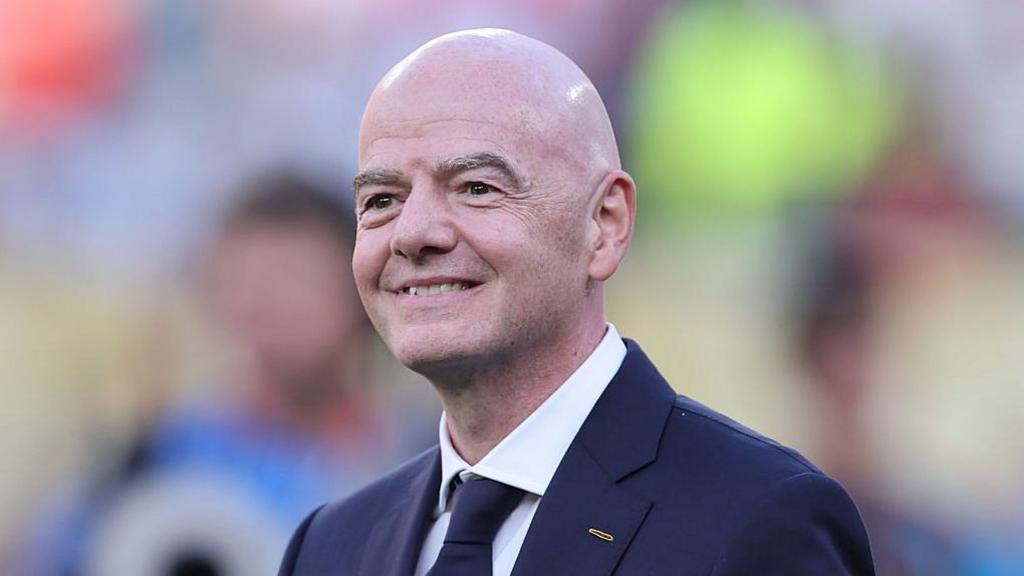
FIFA president Gianni Infantino has launched a passionate defence of the 2026 FIFA World Cup, urging critics to “meditate and pray” after what he described as one of the most successful tournaments in football history.
In a lengthy open letter published on FIFA’s official website, Infantino rejected widespread criticism surrounding the competition, insisting that many detractors had allowed negativity to overshadow what he believes was a landmark World Cup.
The expanded tournament generated headlines both on and off the pitch.
Alongside memorable football moments, it also attracted controversy over ticket pricing, the introduction of hydration breaks, visa issues involving Somali referee Omar Artan, and political tensions affecting several participating nations.
Despite the scrutiny, Infantino maintained that the competition fulfilled FIFA’s vision of uniting the world through football.
Opening his message with a direct response to critics, Infantino accused many observers of focusing solely on controversy instead of celebrating the achievements of the tournament.
“Sorry that you were so consumed by hate and criticism that you missed it all,” wrote Infantino.
“Sorry that the matches are now over and you missed all that joy and togetherness.”
The FIFA president argued that while critics concentrated on perceived shortcomings, tournament organizers remained committed to delivering a memorable global event.
“While critics were spreading hate and false rumours”, FIFA were on the “front lines organizing, working hard, and delivering the best show in the world.”
Infantino also insisted that the World Cup was conducted in a safe environment from start to finish.
“There was no violence, no incidents, 100 per cent safety and security, only joy and happiness.”
One of the tournament’s biggest talking points centred on United States forward Folarin Balogun.
The striker was shown a red card against Bosnia and Herzegovina, an offence that ordinarily would have ruled him out of the USA’s Round of 16 clash against Belgium.
However, the suspension was deferred for 12 months after United States President Donald Trump revealed he had personally asked Infantino to review the incident.
The decision generated fierce criticism across football, with many questioning FIFA’s disciplinary process.
Addressing the controversy, Infantino defended the organization’s handling of the case.
“Your dissatisfaction with a few decisions made by the competent authorities is understandable, but please refer to public records: such decisions are common in some of the most important leagues.
“Indeed, ‘arguable’ referees’ decisions or ‘strange’ disciplinary rulings such as for instance potentially mistaken red or yellow cards or subsequent decisions not to ban players in certain situations are routine and widely accepted in some of the biggest leagues worldwide.
“It’s curious that the same countries employing these practices are the ones criticizing.”
The remarks represent FIFA’s strongest public defence yet of one of the tournament’s most controversial disciplinary decisions.
The competition was also affected by several geopolitical issues.
Iran experienced difficulties entering the United States amid ongoing tensions between both countries, while Argentina celebrated their victory over England with a banner referencing the Falkland Islands.
Those incidents fuelled debate over whether politics had overshadowed football during the tournament.
Infantino, however, insisted the World Cup ultimately demonstrated football’s unique ability to unite people despite global divisions.
Discussing Iran’s participation, he wrote: “When the Iranian team began playing, all the chants against them turned into a single song. The fans became the country, they became the team, and they stood behind Team Melli.”
He continued by reinforcing FIFA’s long-standing message that football should remain separate from political conflict.
“This is the power of football. The Iranian team received visas to enter because football is about peace. It’s not about politics. Football is about unity, not division. Football is bigger than hate and discrimination.”
His comments came despite criticism from Iran captain Mehdi Taremi, who described his nation’s treatment during the tournament as “like a disaster,” while head coach Amir Ghalenoei claimed his side had been “the most oppressed” team at the Infantino also expressed gratitude to the governments of the United States, Canada and Mexico for their cooperation in staging football’s biggest tournament.
According to the FIFA president, the successful organization of the month-long event would not have been possible without the commitment shown by the three co-host nations.
“All of this was made possible thanks to the governments of the three host countries and their tremendous contributions.”
The tournament marked the first 48-team FIFA World Cup and the first to be jointly hosted by three countries.
Infantino concluded his open letter with another direct appeal to those who questioned FIFA’s leadership throughout the tournament.
Rather than engaging further in public criticism, he encouraged detractors to reflect before judging the competition.
“May you find peace; we at FIFA have found ours and we deliver it, by delivering the most outstanding FIFA World Cup. May football rise above all hate.”
The letter underlines FIFA’s determination to defend both the tournament and its governance despite continuing scrutiny from supporters, media organisations and football stakeholders.
Whether Infantino’s passionate defence succeeds in changing opinions remains uncertain, but his message leaves little doubt that FIFA believes the 2026 World Cup will ultimately be remembered for its football rather than the controversies that surrounded it.

Toosin is a dedicated sports writer with a strong background in crafting engaging and insightful content. With experience at Goal, he has developed a sharp editorial sense and a refined storytelling approach that brings depth and perspective to sports journalism. His passion for the game goes beyond the headlines, as he captures both the excitement of the sport and the compelling human narratives behind each event. Toosin’s work resonates with a broad and diverse audience, making global sports stories accessible, relatable, and impactful.