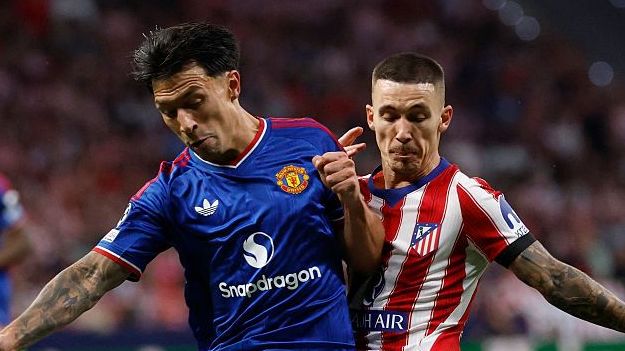
Lisandro Martinez has delivered a blunt assessment of Manchester United’s struggles after their defeat to Atletico Madrid in the UEFA Champions League, questioning the club’s leadership, transfer investment and approach to managerial changes.
The Argentine defender did not hide his frustration after United’s disappointing performance, insisting that the problems at Old Trafford extend beyond the players and coaching staff.
Martínez admitted he had to work hard to control his emotions following the loss, describing the display as a reflection of the club’s current situation.
“This performance was really poor. I have to control myself a lot”.
“Sometimes it’s a reflection in the mirror of our club at this moment”.
His comments point to growing concerns about the direction of Manchester United, with the defender challenging those responsible for the club’s wider football operations to take a closer look at the issues holding the team back.
Rather than placing the blame solely on the manager or players, Martínez argued that accountability must extend to other areas of the organisation.
The centre-back also made his expectations clear when discussing the club’s technical director, suggesting that more must be done to address United’s shortcomings.
“I expect more from our technical director”.
“If you don’t change, next season it’s a big problem”.
“You keep changing managers but what about other areas?”.
“It’s easy to say coach, players, but also we have to see others?”.
The remarks represent a pointed challenge to United’s decision-makers, particularly amid continued debate about the club’s recruitment strategy and long-term sporting structure.
Martínez’s argument is that repeatedly changing managers will not automatically solve the problems if other parts of the club remain untouched. For the defender, meaningful progress requires a broader review of the decisions being made away from the pitch.
He also addressed questions about whether Michael Carrick had received sufficient backing, offering a firm response in defence of the coach.
“I don’t think so. He did his best”.
Martínez’s comments suggest he believes the support available to Carrick was not enough to deliver the improvements expected at Manchester United.
The Argentine also highlighted his frustration with the club’s transfer business, making it clear that he had anticipated a more ambitious approach during the summer window.
“I expected MORE investments in the summer”, told Amazon.
His demand for greater investment adds another dimension to the criticism, raising questions about whether United have done enough to provide the squad with the resources required to compete consistently at the highest level.
For a club with Manchester United’s ambitions, the defender’s message is difficult to ignore. Poor performances may place players and coaches under immediate scrutiny, but Martínez believes the responsibility for turning things around must be shared across the entire football operation.
The defeat to Atletico Madrid has therefore become more than a disappointing result for United. It has prompted a direct challenge from one of their own players over leadership, recruitment and the club’s broader direction.
With expectations remaining high at Old Trafford, Martínez has warned that failure to address the underlying problems could leave United facing another difficult campaign.
His message is clear: changing managers alone will not be enough. If Manchester United want to move forward, the people making decisions behind the scenes must also be prepared to answer difficult questions.

Toosin is a dedicated sports writer with a strong background in crafting engaging and insightful content. With experience at Goal, he has developed a sharp editorial sense and a refined storytelling approach that brings depth and perspective to sports journalism. His passion for the game goes beyond the headlines, as he captures both the excitement of the sport and the compelling human narratives behind each event. Toosin’s work resonates with a broad and diverse audience, making global sports stories accessible, relatable, and impactful.