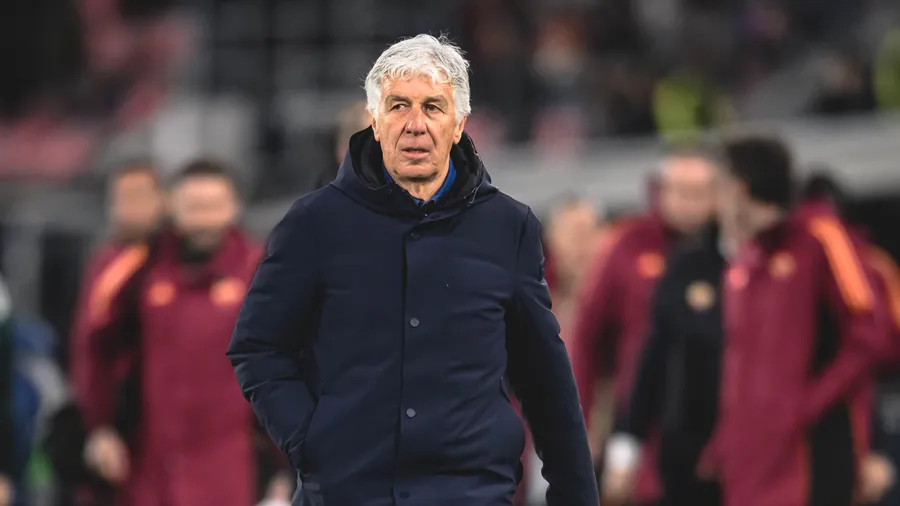
Gian Piero Gasperini shared his thoughts after AS Roma battled to a 1–1 draw with Bologna in the first leg of their UEFA Europa League round-of-16 encounter.
In a fiercely contested match, Bologna struck through Federico Bernardeschi, while Roma fought back to keep the tie evenly poised ahead of the return leg in the Italian capital.
Although the Giallorossi struggled to carve out clear chances early on, momentum gradually shifted as the game progressed, particularly after the influence of Bryan Cristante and substitute Lorenzo Pellegrini.
Reflecting on the physical nature of the contest, Gasperini admitted his side initially found it difficult to cope with Bologna’s direct approach.
“Bologna obviously made a very physical game of it with lots of long balls, a bit like Genoa, and we weren’t always able to win the second balls,” said Gasperini.
“They seemed to be a bit stronger. Afterwards we did better, we adapted, but I must say that we created several dangerous situations in the first half too.
“We weren’t quite on their level in this type of game, but they were allowed to get away with a lot of things and the atmosphere definitely had an impact as well.”
Despite conceding first, Gasperini acknowledged Bologna’s quality while also insisting the final scoreline reflected the balance of play.
“It was superb at times and Bologna clearly have some excellent players.
“But I have to say I think it’s probably a fair result because we fashioned various dangerous situations of our own.”
The Roma boss also highlighted the growing importance of physical battles and second balls in modern football, especially when teams employ aggressive pressing systems.
“Second balls are key nowadays. Lots of teams implement a really high pressing game and that often forces you to go long because it becomes risky otherwise, unless you have incredibly good technical players.
“Very often we end up playing ‘rugby football’ on the second balls.
“Then there are lots of variables as to whether you can get into the opposition half and create goal-scoring chances.”
He also suggested external factors such as seasonal weather conditions can influence how matches unfold tactically.
“I think it’s partly a seasonal thing. I think once the weather changes and the temperature changes, a bit like in the last 20-30 minute of games, we’ll start seeing more possession play.
“I think that might start happening soon.”
Looking ahead to the decisive second leg, Gasperini admitted that physicality could again play a key role, particularly with Roma fielding a relatively young squad.
“You probably need bigger players up front for this ‘rugby football’.
“When the game is played like this, it’s much harder to build play with technique because there’s so much physicality involved.
“We have a very young team – certainly today we did – so we might have a bit less strength.
“But we got into the game over the 90 minutes. The match in Rome will probably prove decisive but both teams are capable of playing a different way.”
Finally, Gasperini dismissed suggestions that Roma lacked attacking bravery, pointing instead to the quality of their opponents and the challenging away atmosphere.
“It had nothing to do with not being bold enough. I think we created four or five situations, maybe a few more, so it wasn’t our approach that was wrong.
“We have to consider our opponents too, and they’re very good opponents, but our performance wasn’t bad at all.”
The gaffer continued: “We struggled at times over the 90 minutes but we were also playing at a difficult away ground where everything was amplified.
“I don’t think we’ll see the same thing at our stadium: it will be more balanced.
“We’ll need to create situations by using the ball well and we’re confident we’re capable of doing that.”
With the tie delicately balanced at 1–1, Roma will now look to make home advantage count in the second leg at Stadio Olimpico.

Toosin is a dedicated sports writer with a strong background in crafting engaging and insightful content. With experience at Goal, he has developed a sharp editorial sense and a refined storytelling approach that brings depth and perspective to sports journalism. His passion for the game goes beyond the headlines, as he captures both the excitement of the sport and the compelling human narratives behind each event. Toosin’s work resonates with a broad and diverse audience, making global sports stories accessible, relatable, and impactful.