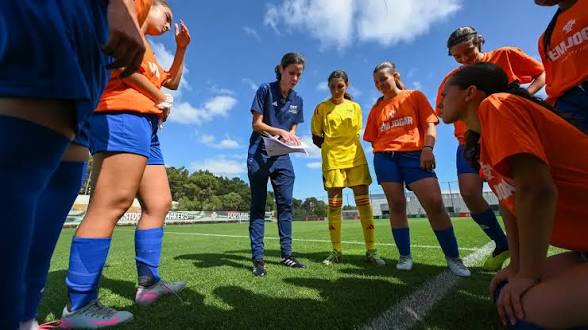
FIFA, in a landmark move aimed at reshaping the women’s game, has approved new regulations requiring all teams in its women’s tournaments to include a female head coach or assistant coach.
The policy, set to kick off at the upcoming FIFA U-20 Women’s World Cup in September, signals a decisive push toward greater gender representation on the sidelines.
It will subsequently be enforced at the next senior FIFA Women’s World Cup in Brazil and across future club competitions.
Under the new framework, teams must also have at least two female staff members on the bench, one of whom can be the designated coach, while an additional requirement ensures at least one woman is included in the medical team.
As a result, FIFA is not only raising the bar but also creating structured pathways for women to thrive in technical roles.
“There are simply not enough women in coaching today,” said Jill Ellis. “We must do more to accelerate change by creating clearer pathways, expanding opportunities, and increasing the visibility for women on our sidelines.”
Currently, despite the rapid growth of women’s football, female representation in coaching remains limited.
For instance, only 12 of 32 head coaches at the 2023 Women’s World Cup were women, while last summer’s European Championship featured just seven female head coaches: less than half of participating teams.
Even in domestic leagues such as England’s Women’s Super League, the numbers remain modest.
To complement this rule, FIFA continues to roll out development initiatives, including scholarship programmes supporting hundreds of female coaches worldwide and mentorship schemes designed to nurture emerging talent.
Consequently, the governing body hopes this dual approach will fast-track progress both on and off the pitch.
Meanwhile, attention is also turning to the future of the global women’s game.
FIFA has confirmed that hosts for the 2031 and 2035 Women’s World Cups will be decided later this year.
Notably, the United Kingdom stands as the sole bidder for the 2035 edition, proposing an ambitious multi-city tournament across England, Wales, Scotland, and Northern Ireland.
All things considered, this latest decision marks a significant shift in football governance.
By enforcing structural inclusion, FIFA is not only addressing a long-standing imbalance but also setting the stage for a more diverse and representative future in women’s football.

Toosin is a dedicated sports writer with a strong background in crafting engaging and insightful content. With experience at Goal, he has developed a sharp editorial sense and a refined storytelling approach that brings depth and perspective to sports journalism. His passion for the game goes beyond the headlines, as he captures both the excitement of the sport and the compelling human narratives behind each event. Toosin’s work resonates with a broad and diverse audience, making global sports stories accessible, relatable, and impactful.