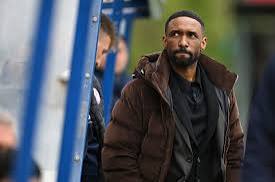
Jermain Defoe’s brief managerial spell at Woking has taken another dramatic twist after the club’s director of football, Jody Brown, publicly responded to the former England striker’s departure.
Just days after Defoe announced he was stepping away from the National League side by mutual consent, Brown released a strongly worded statement outlining the club’s version of events.
The football executive claimed the former Tottenham Hotspur star failed to attend a crucial meeting and training session before his exit, while also revealing growing concerns had emerged internally during pre-season.
The revelations paint a different picture from Defoe’s own explanation, where he described the role as an “eye-opening” experience and insisted that circumstances had made it impossible for him to continue.
Instead, Brown suggested Woking had fully backed the rookie manager and were surprised by the sudden nature of his departure.
Defoe accepted his first senior managerial role in March, taking charge of Woking with hopes of beginning a new chapter after an illustrious playing career.
The 43-year-old oversaw just six competitive matches, winning two and losing one before agreeing to terminate his contract after only four months in charge.
Despite the limited time in the dugout, Woking had entrusted Defoe with significant responsibility over football operations, including recruitment and staffing decisions.
Brown admitted he personally recommended the appointment and accepted responsibility for the decision.
“The recommendation to appoint Jermain as manager was mine, and I take full responsibility for it,” Brown said.
“After meeting with him on several occasions, I believed he was the right person to lead the club into an exciting new era.”
However, he acknowledged that a successful playing career does not always guarantee managerial success.
“As we have seen many times before, success as a player does not always translate into management and leadership. I sincerely hope to see him succeed in whichever direction he follows.”
According to Brown, Defoe consistently projected optimism about the upcoming season, making his sudden exit even more surprising.
“Jermain’s feedback was always positive, and he regularly expressed his enthusiasm and excitement for the season, both publicly and privately.
“I can therefore appreciate the surprise and subsequent speculation surrounding his sudden departure.”
Behind the scenes, however, Brown claimed concerns had started to surface from multiple areas within the football club.
He revealed that feedback had been received from players, staff members and other departments, prompting the club to seek a detailed report on squad planning and recruitment.
“However, in recent weeks there had been feedback from across the club, including players, staff and other departments, regarding growing concerns.
“To better understand the situation, I asked Jermain and Paul (Bracewell, assistant) for a brief report outlining the squad’s current depth, recruitment targets and any operational challenges, so we could provide the support required and accelerate preparations for the season.
“That report was requested on more than one occasion but was never received.”
Brown then disclosed what he believes became a significant factor in Defoe’s departure.
The director claimed both Defoe and assistant manager Paul Bracewell failed to attend a scheduled planning meeting as well as the team’s training session on the same day.
“A meeting was subsequently scheduled involving the directors, manager, assistant manager and head of operations to review preparations for the season.
“Neither Jermain nor his assistant attended that meeting or that day’s training session.
“Throughout his tenure, Jermain had never communicated any serious concerns directly to me, so I am not going to speculate on his reasons.”
The statement represents the clearest explanation yet from the club regarding the circumstances surrounding the former striker’s exit.
Brown rejected suggestions that the club had failed to provide adequate backing, insisting Woking remained committed throughout Defoe’s tenure.
He argued that challenges are common across every football club and should be addressed through communication rather than absence.
“Every football club faces challenges. Players want more game time, improved contracts or transfers.
“The media team might want better equipment, the medical department more interns, the strength and conditioning staff larger gym space, and the car park attendants may want more coffee. But people do not just fail to turn up.”
The remarks underline the frustration felt by the club’s hierarchy following the abrupt end to Defoe’s first managerial experience.
Defoe remains one of English football’s most respected former forwards, having enjoyed a distinguished career with Tottenham Hotspur, Sunderland, Portsmouth, Rangers and the England national team.
While his first venture into management has ended far sooner than anticipated, many within football will still expect the former striker to pursue another opportunity in coaching.
For Woking, attention now shifts towards appointing a new manager capable of restoring stability ahead of the new National League season.
Meanwhile, Brown’s unusually candid statement has ensured that Defoe’s departure will remain one of the most talked-about managerial stories of the summer, leaving supporters waiting to hear whether the former England international will offer a response to the club’s claims.

Toosin is a dedicated sports writer with a strong background in crafting engaging and insightful content. With experience at Goal, he has developed a sharp editorial sense and a refined storytelling approach that brings depth and perspective to sports journalism. His passion for the game goes beyond the headlines, as he captures both the excitement of the sport and the compelling human narratives behind each event. Toosin’s work resonates with a broad and diverse audience, making global sports stories accessible, relatable, and impactful.