Pressure continues to mount on FIFA after Greater Manchester Mayor Andy Burnham launched a passionate attack on the governing body’s proposal to open the commercial future of the FIFA World Cup to private investment.
Burnham’s comments add significant political weight to the growing backlash against FIFA’s newly announced FIFA Forward Enterprise (FFE), a proposed commercial entity designed to combine the sale of FIFA’s commercial rights with the operational management of its major competitions.
The governing body believes the new structure could unlock fresh investment opportunities and strengthen the commercial growth of its tournaments.
However, the announcement has sparked fierce opposition from across the football landscape, with governing bodies, supporter groups and political figures warning that the sport’s most prestigious competition risks becoming another financial asset rather than a sporting institution.
Among the strongest critics is Burnham, a lifelong Everton supporter, who made his position crystal clear in a statement shared on social media.
“Let me say this very directly. Football does not belong to investors. It belongs to the people who fill the stands and who stand on the touchline week in, week out, rain or shine,” Burnham said.
The former cabinet minister argued that football’s value cannot simply be measured through commercial returns or investment portfolios.
For Burnham, the World Cup represents something far greater than a global entertainment product. It is a competition built on decades of history, emotion and national pride.
He continued: “The World Cup is not a product. It is the greatest competition in world sport, and it was never anyone’s to sell. Dress the deal up however you like. Once you have sold a piece of it, you have sold out.
“Football belongs to the fans. It always has, and it always will.”
His comments echo concerns already raised by UEFA, which swiftly criticised FIFA’s proposal following Tuesday’s announcement.
European football’s governing body warned that football’s identity should never become a commercial commodity, insisting that the governance of the game must remain independent of private financial interests.
The criticism has also been strongly supported by the Football Supporters’ Association (FSA), which described FIFA’s latest proposal as another worrying step in the organisation’s increasingly commercial direction.
In a strongly worded statement, the FSA accused FIFA of placing financial interests ahead of supporters and the long-term health of the game.
“Many supporters came home from the World Cup believing FIFA couldn’t do much more to ruin everything we love about football’s greatest tournament. Less than two weeks after the final ball was kicked, they’ve shown they can always find a new low.
“Like so many across the game, we are furious. We will examine the detail as it emerges, but we will do everything in our power as fans to fight back against the long line of decisions made that seriously threaten the future of football for short-term commercial gain.
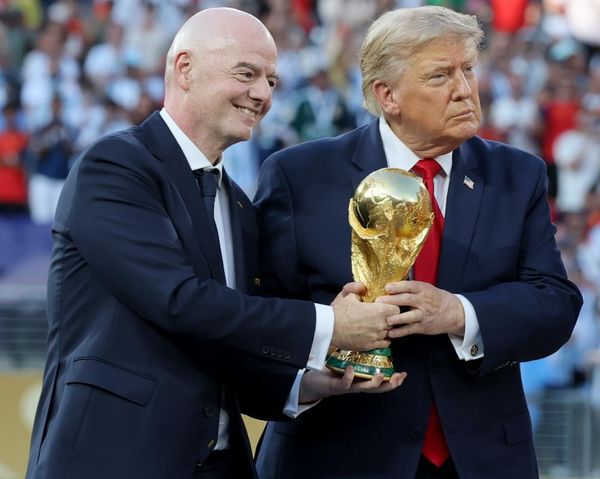
“This cannot become another step in Gianni Infantino’s attempt to reshape football without regard for supporters or the wider game. We fully support UEFA’s statement.
“Every governing body, national association, league, club, supporter and stakeholder now has a responsibility to stand together and protect the future of our game.”
The proposed FIFA Forward Enterprise would represent one of the biggest structural changes in world football administration in recent years by allowing outside investors to participate in the commercial operation of FIFA competitions, including the World Cup.
Supporters of the proposal argue that additional investment could help modernise tournament operations and generate greater revenue for football development across the globe.
Critics, however, fear the move could reduce football’s flagship competition to another commercial vehicle, where investor priorities gradually outweigh sporting integrity and supporter interests.
The debate is now rapidly becoming one of football’s defining governance issues.
With UEFA, supporters’ organisations and influential political voices now publicly opposing the proposal, FIFA faces increasing pressure to justify how private investment can coexist with the traditions and values that have made the World Cup the most celebrated tournament in world football.
For now, one message from Burnham has become the rallying cry of the opposition: football’s greatest competition belongs to the supporters, not the investors.

Toosin is a dedicated sports writer with a strong background in crafting engaging and insightful content. With experience at Goal, he has developed a sharp editorial sense and a refined storytelling approach that brings depth and perspective to sports journalism. His passion for the game goes beyond the headlines, as he captures both the excitement of the sport and the compelling human narratives behind each event. Toosin’s work resonates with a broad and diverse audience, making global sports stories accessible, relatable, and impactful.