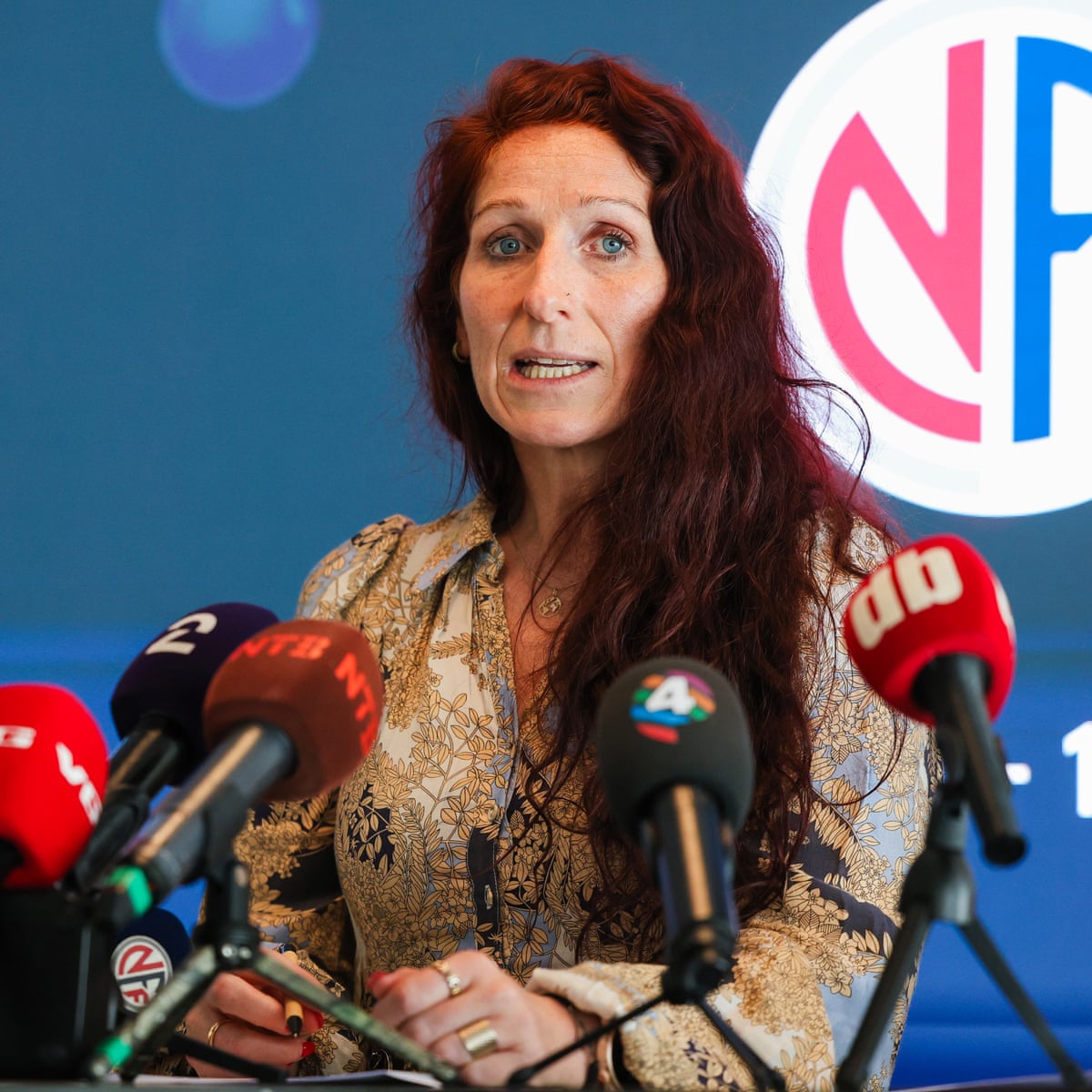
FIFA is facing another storm at the top after Norway Football Federation president Lise Klaveness strongly criticised the governing body’s decision to remove chief operating officer Kevin Lamour.
Lamour was dismissed late Monday, just 17 days after publicly criticising FIFA president Gianni Infantino over the controversial plan to sell a stake in a FIFA commercial venture to private investors.
For Klaveness, the timing of Lamour’s exit is impossible to ignore.
“Now he is thrown out and we are supposed to move on. It’s unacceptable, it’s management by fear,” Klaveness told the Associated Press, describing Lamour as “the best football administrator I have ever met.”
The Norwegian official also called on FIFA’s senior leadership and administrators to resist decisions they believe could damage the interests of the global game.
“Now we also have to call upon FIFA leadership and the administration to not submit to orders you know are not in the interests of football,” Klaveness added, especially targeting FIFA secretary general Mattias Grafstrom.
Lamour had been closely associated with Infantino for almost two decades.
The pair worked together at UEFA between 2007 and 2015, before Lamour joined Infantino’s campaign team during his successful bid for the FIFA presidency in 2016.
Two years ago, Lamour moved from UEFA to FIFA, where he became responsible for a significant portion of the organisation’s operations in Zurich.
His eventual criticism of Infantino therefore carried considerable weight.
In a statement released on July 31, Lamour accused FIFA staff of being “deceived” by the lack of transparency surrounding the proposed commercial project.
He argued that employees “deserve better than contempt and intimidation” before challenging football leaders to stand up and make what he considered the right decisions.
“If that means I lose my job, then so be it. I will understand and respect that decision. At least I’ll sleep well tonight.”
Seventeen days later, he was out.
Klaveness was particularly direct when discussing the circumstances surrounding Lamour’s departure.
“This is a firing situation, it’s not a resignation,” Klaveness said, suggesting the decision was made by Grafstrom “obviously being pressured by the president.”
FIFA, however, offered a much shorter explanation.
In a statement, the organisation said it “thanks Kevin for his two years of service and wishes him the best of luck for the future.”
But Klaveness believes Lamour’s intervention was crucial in bringing the controversial FIFA Forward Enterprise proposal to an end.
“His statement was necessary to kill the project,” Klaveness said of Lamour’s intervention. “He said something that was obvious, that was very important that someone within the staff told us the story so that we knew it was not FIFA, as such, but one person.”
The controversy centres on a proposed $20 billion private equity project that triggered resistance from several major football authorities.
The plan involved selling a 20% stake in a FIFA commercial spin-off to investors led by Joshua Kushner in a deal reportedly valued at $4.2 billion.
The proposal would have generated funding for FIFA’s 211 member associations, with each federation potentially receiving a $20 million offer.
However, opposition grew after concerns about transparency and governance emerged.
UEFA, the Asian Football Confederation and Concacaf were among the organisations to push back against Infantino’s plans.
New Zealand has also withdrawn its support for Infantino’s expected re-election bid, while other national associations have raised concerns about his leadership.
Infantino had appeared almost certain to secure another term as FIFA president, potentially without serious opposition.
That picture has now changed dramatically. The FIFA presidential election is scheduled for March 2027 in Morocco, with November 18 set as the deadline for potential challengers to enter the race.
The dispute over the failed investment proposal has therefore arrived at a politically sensitive moment.
Klaveness, who is also a UEFA executive committee member, has long pushed for greater transparency and accountability in football governance.
Her latest intervention adds another powerful voice to the growing debate over Infantino’s leadership.
For FIFA, the challenge is no longer simply about a failed commercial project. It is increasingly about trust, internal culture and whether football’s governing body can convince its members that its decisions are being made in the best interests of the game.

Toosin is a dedicated sports writer with a strong background in crafting engaging and insightful content. With experience at Goal, he has developed a sharp editorial sense and a refined storytelling approach that brings depth and perspective to sports journalism. His passion for the game goes beyond the headlines, as he captures both the excitement of the sport and the compelling human narratives behind each event. Toosin’s work resonates with a broad and diverse audience, making global sports stories accessible, relatable, and impactful.