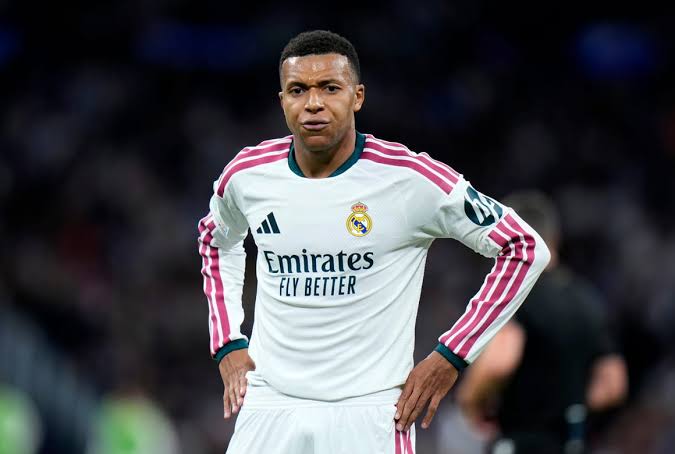
Kylian Mbappé is facing a growing commercial backlash in China after at least three major companies ended their partnerships with the French football star over comments that appeared to describe former Chinese leader Mao Zedong as a dictator.
Beverage manufacturer Dongpeng, dairy giant Mengniu and cheese producer Milkground announced on Tuesday that they were terminating their agreements with the Real Madrid forward. Their decisions followed the circulation of a video clip showing Mbappé discussing a meme featuring his image and Mao, the founding leader of the People’s Republic of China.
Although the companies did not directly identify the remarks that prompted their decisions, they issued similarly worded statements opposing “any words and actions that hurt national sentiment.”
The controversy has quickly put Mbappé’s commercial relationships in the Chinese market under pressure, where his image has featured prominently in advertising campaigns for food and beverage products.
The clip reportedly originated from an interview recorded ahead of Mbappé’s appearance on the French online talk show The Bridge. During the conversation, the France captain was asked about his favourite meme of himself.
Mbappé replied that it was “a video someone made of a guy … I think he was a Chinese dictator” before the clip showed an edited image placing his face on the body of Mao Zedong, who led China from the founding of the People’s Republic in 1949 until his death in 1976.
The footage subsequently circulated on X, drawing attention to the remarks and triggering criticism among some Chinese social media users.
The Associated Press reported that it was immediately unable to reach Mbappé’s representatives for comment.
The fallout has also extended beyond the three companies. Chinese social media platform RedNote issued a separate statement confirming that its content partnership with Mbappé had ended on December 31, 2024. The platform said it would “remove related promotional materials” and reiterated its opposition to “any conduct that hurts national sentiment.”
Mbappé has previously featured in several advertising campaigns aimed at Chinese consumers. His commercial appearances have included a Dongpeng advertisement in which he delivers a slogan in Chinese, as well as a Mengniu campaign featuring fellow football superstar Lionel Messi.
The latest developments could put further pressure on the forward’s commercial standing in a market where international sports stars have attracted major brand partnerships.
Reaction on Chinese social media has been particularly intense, with criticism spreading across Weibo, one of the country’s leading social networking platforms.
The hashtags “Dongpeng ends partnership with Mbappé” and “Several brands end partnerships with Mbappé” reportedly topped Weibo’s trending list. Another trending topic, “Football fans boycott Mbappé”, reflected calls from some users to reject the player and his remarks.
While the companies have announced their decisions, the full commercial impact on Mbappé remains unclear. The episode nevertheless highlights the risks international celebrities face when remarks interpreted as politically or culturally insensitive trigger a backlash in a major market.
For Mbappé, whose global profile extends well beyond football, the controversy has shifted attention from his sporting career to the strength of his commercial relationships in China. With several brands already distancing themselves, the response to the viral clip could have consequences for his future promotional activities in the country.

Toosin is a dedicated sports writer with a strong background in crafting engaging and insightful content. With experience at Goal, he has developed a sharp editorial sense and a refined storytelling approach that brings depth and perspective to sports journalism. His passion for the game goes beyond the headlines, as he captures both the excitement of the sport and the compelling human narratives behind each event. Toosin’s work resonates with a broad and diverse audience, making global sports stories accessible, relatable, and impactful.