
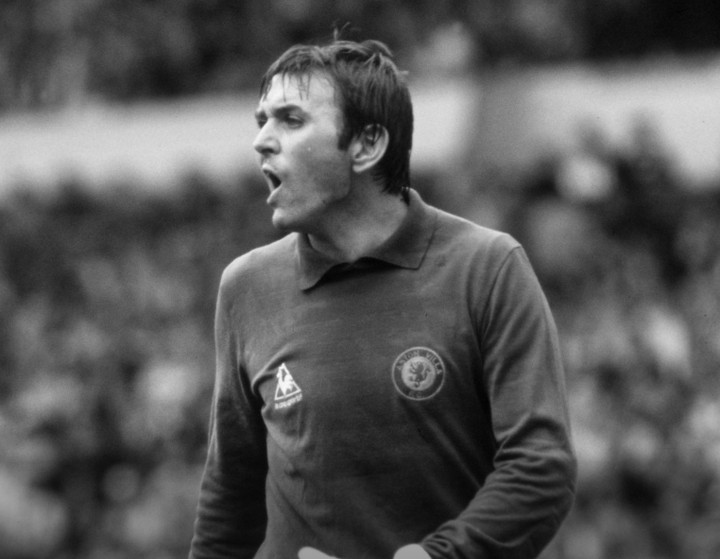
Former Manchester United and Aston Villa goalkeeper Jimmy Rimmer has died at the age of 78, bringing to an end the life of a player whose career was woven into two of English football’s most historic European triumphs.
Rimmer enjoyed a distinguished career that also included spells with Arsenal, Swansea City and Luton Town, but his legacy will forever be closely linked with Manchester United and Aston Villa.
Remarkably, he collected two European Cup winner’s medals with two different clubs.Yet, in one of football’s cruel twists, Rimmer was not on the pitch when either final ended.
The Lancashire-born legend Rimmer began his football journey through the Man United youth system before progressing into the senior squad.
He was part of the United team that won the European Cup in 1968, although he watched the historic final against Benfica from the substitutes’ bench.
United eventually prevailed in a memorable contest at Wembley, giving Rimmer his first European Cup winner’s medal.
After spending nine years at Old Trafford, the goalkeeper moved to Arsenal in 1974 in search of greater opportunities.
Three years later, another major chapter of his career began.
Rimmer joined Aston Villa in 1977 and quickly established himself as an important figure between the posts.
He went on to make 229 league appearances for the Midlands club, becoming a key part of the team that eventually conquered Europe.
The defining moment came during Villa’s historic 1981-82 European Cup campaign.
Rimmer played in every match on the road to the final and was selected to start against Bayern Munich in Rotterdam.
But the occasion delivered another cruel blow. Just nine minutes into the final, Rimmer suffered a shoulder injury and was forced to leave the field.
His replacement, Nigel Spink, went on to produce a stunning performance as Villa secured a famous 1-0 victory.
Rimmer therefore became a European champion for the second time without being on the pitch at the final whistle.
Aston Villa paid an emotional tribute to Rimmer following news of his death, describing him as one of the finest goalkeepers of his generation.
The club also highlighted the extraordinary misfortune surrounding his two European Cup final appearances.
“Aston Villa is deeply saddened to learn of the passing of European Cup winner Jimmy Rimmer, who has died at the age of 78.
“The thoughts of everyone at the club are with Jimmy’s family and friends at this incredibly difficult time.
“Rimmer was one of the finest goalkeepers of his generation, and arguably one of the unluckiest when it came to big occasions.
“Despite collecting two European Cup winner’s medals, he wasn’t on the pitch at the end of either final.
“Rest in peace, Jimmy.”
Beyond his European achievements, Rimmer enjoyed a long career across the English game.
His time with the Red Devils introduced him to elite football, while his years at Villa cemented his status as a club great.
His career also demonstrated the longevity and resilience required of a goalkeeper, with Rimmer continuing to compete at senior level across several clubs.
But statistics only tell part of the story. Two European Cup medals, 229 league appearances for Villa and a place in the history of both United and Villa underline the scale of his contribution.
Rimmer’s story will always carry an unusual element of heartbreak.
He was part of two teams that reached the summit of European football, yet injury and circumstance prevented him from finishing either final on the pitch.
Nevertheless, his name remains permanently attached to two of the greatest achievements in English club football.
For Manchester United, he was part of the generation that conquered Europe in 1968.
For Aston Villa, he was the goalkeeper who helped guide the club through its unforgettable European Cup journey in 1982.

Toosin is a dedicated sports writer with a strong background in crafting engaging and insightful content. With experience at Goal, he has developed a sharp editorial sense and a refined storytelling approach that brings depth and perspective to sports journalism. His passion for the game goes beyond the headlines, as he captures both the excitement of the sport and the compelling human narratives behind each event. Toosin’s work resonates with a broad and diverse audience, making global sports stories accessible, relatable, and impactful.