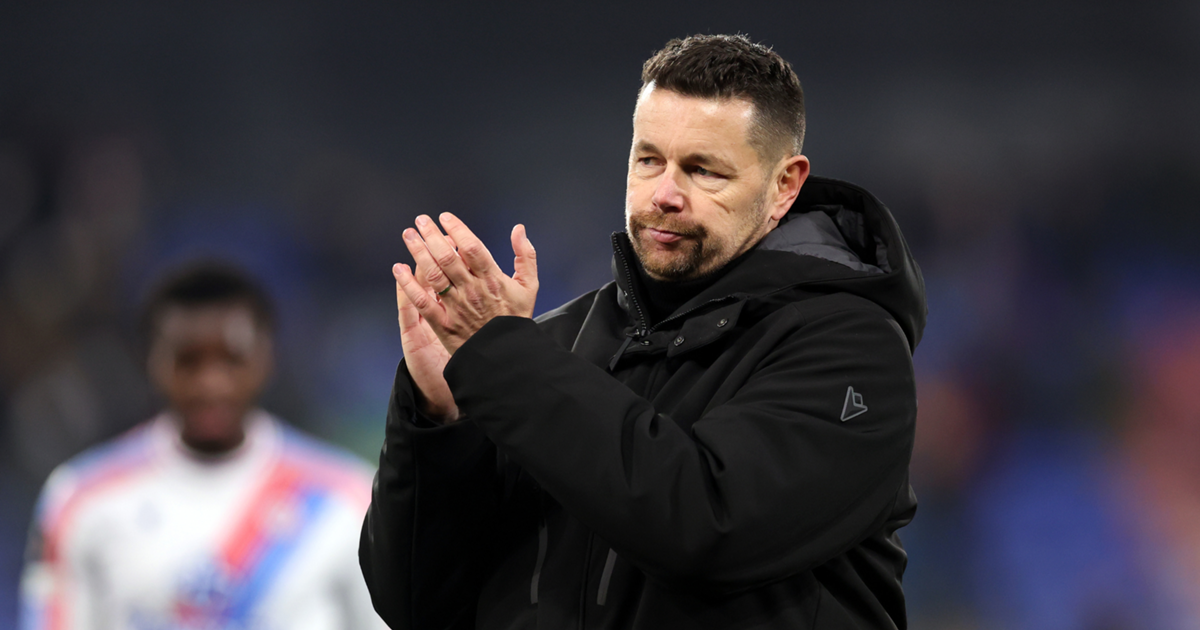
Pierre Sage has praised Crystal Palace’s refusal to surrender after Daichi Kamada struck deep into stoppage time to rescue a 1-1 draw against TSG Hoffenheim at Selhurst Park.
The Eagles looked set for a frustrating evening after conceding early in Thursday’s encounter, but they continued pushing for an equaliser despite facing an uphill battle. Their task became even harder late in the contest when they were reduced to 10 men, yet Kamada delivered the decisive moment to secure a share of the points.
For Sage, the result reflected the determination his players showed throughout the contest, although he admitted Palace needed goalkeeper Dean Henderson to keep them in the game during difficult spells.
Speaking after the match, the Palace manager acknowledged that conceding so early forced his side to chase the game and left them exposed to the visitors’ attacking threat. Both teams created opportunities, but Henderson’s contribution proved crucial before Kamada’s late intervention changed the outcome.
“With this scenario, by conceding early in the game it was difficult because we had to push to come back.
“We created chances and they created too. Dean Henderson kept us in the game, that’s why it’s difficult to say it’s 100 percent on our side or their side, but with this save he kept us in the game and we scored at the end.
“I think the players deserved it, because they didn’t give up, and that’s the main thing I want to keep this evening.”
While the late equaliser provided relief, Sage was equally interested in the areas where Palace must improve. The French manager felt his team showed greater attacking intent than in their previous two outings but identified defensive organisation as an ongoing concern.
Palace struggled at times to contain Hoffenheim in individual duels, allowing the visitors too much space to create dangerous opportunities. Sage believes his players must find a better balance between protecting their defensive shape and maintaining enough attacking presence to influence games.
“Offensively we did better as you know than our two previous games.
“We have to continue to improve defensively because we gave too much space to the opponent. We are sometimes in difficulty in 1v1s, in duels, and that’s why they created these kind of chances.
“But when we defend too much we have no chance to exist in the game, and when we try to attack, we are quickly open. What is difficult for us is to find the balance between the two things.
“The last games it was really difficult to attack. At Fulham, we scored one goal in the end but we didn’t create too many chances.
“We can defend better, we can defend as a team when we defend low. But when we solve something a new thing emerges and we have to deal with that.
“That’s why I think the best way for this team is to keep the ball, and to keep the ball with efficiency, and this evening we showed that too.”
Sage’s assessment suggests that ball retention could be central to Palace’s efforts to become more consistent. He wants his players to control possession with greater purpose, reducing the pressure on their defence while creating more opportunities to threaten opponents.
Beyond the tactical issues, however, the manager was encouraged by the team’s mentality. Even after falling behind and losing a player, Palace continued searching for a way back into the contest rather than accepting defeat.
“What is important in this situation is to stay alive and to push – and we pushed until the end and created chances.
“What is important is to keep in mind that we tried all the game to come back, and at the end we came back, and we had maybe the chance to have more.”
Kamada’s injury-time strike ensured Palace left Selhurst Park with something to show for their persistence. However, Sage knows the point will only become more valuable if his side can build on their attacking improvement and address the defensive weaknesses exposed against Hoffenheim.

Toosin is a dedicated sports writer with a strong background in crafting engaging and insightful content. With experience at Goal, he has developed a sharp editorial sense and a refined storytelling approach that brings depth and perspective to sports journalism. His passion for the game goes beyond the headlines, as he captures both the excitement of the sport and the compelling human narratives behind each event. Toosin’s work resonates with a broad and diverse audience, making global sports stories accessible, relatable, and impactful.