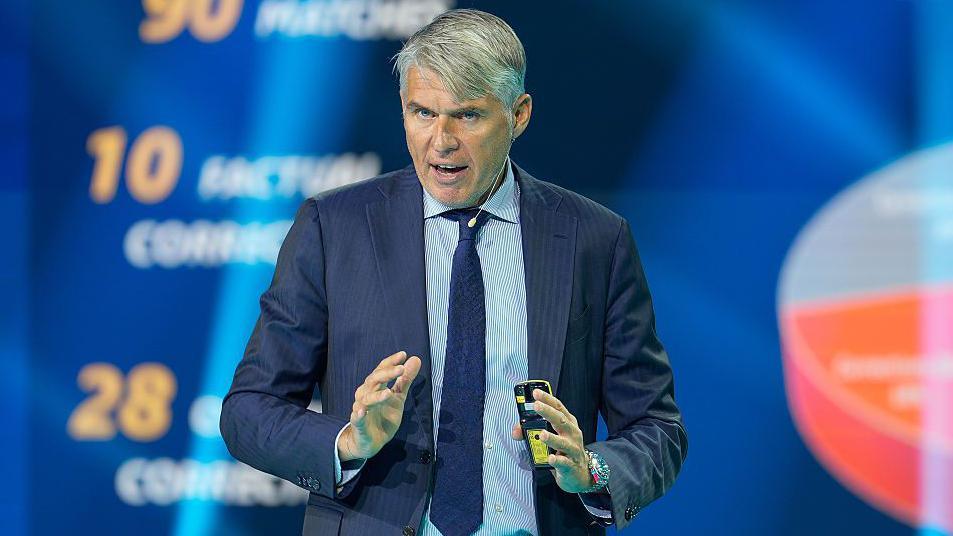
UEFA referees’ chief Roberto Rosetti has called for a major rethink of how VAR is used, insisting video technology must return to its original purpose and stop interfering with the natural flow of football.
With the new European season approaching, Rosetti held talks with senior officials from the Premier League, Serie A, La Liga, Ligue 1 and Bundesliga.
The meeting focused on one of football’s most persistent controversies: how consistently VAR is being applied across Europe’s biggest leagues.
Rosetti believes the technology can improve the game, but only if officials resist the temptation to scrutinise every tiny incident.
“We realise that everywhere now there is not any satisfaction about how VAR is impacting football,” he said.
“So we want to avoid microscopic situations. The context is super important. It’s football, not PlayStation. We need to be very, very careful.”
One of the biggest differences between Europe’s leading competitions continues to be the interpretation of handball incidents.
Although football’s laws are intended to be universal, the way certain situations are judged can vary significantly from one country to another.
Rosetti acknowledged those differences but believes UEFA must push towards greater consistency.
“The idea is to be more consistent in the application of the laws.
“The perception about handball in England is different.
“Football is not perfect, and sometimes we will continue to have similar situations interpreted in different ways but at least we are working together.”
That consistency could become increasingly important as VAR continues to influence major decisions in domestic leagues and European competitions.
VAR has been a constant source of debate since it was introduced into the Premier League in 2019.
Instead of eliminating controversy, the technology has often created new arguments over delays, replays and subjective decisions.
Rosetti now wants referees to regain the authority they had before VAR became such a dominant part of matchday discussions.
He also pointed to one of football’s most famous controversies — Diego Maradona’s infamous ‘Hand of God’ goal at the 1986 World Cup — as an example of the type of clear incident technology was designed to address.
“We like referees with personality, taking decisions on the pitch, and VAR intervening only for clear and obvious situations,” he continued.
“So clear images without too many replays. It is something that for us is very important.
“We were seeing that some on-field reviews were not connected with football. It’s about normal speed, context. It’s about football.”
The message from UEFA is straightforward: VAR should support referees, not turn every match into a forensic investigation.
Rosetti and UEFA have also introduced Clear Line, a video portal designed to help supporters understand when VAR should — and should not — intervene.
Rather than creating another technical resource exclusively for officials, the initiative is intended to give fans, clubs and players a clearer reference point.
The platform will provide examples of incidents and explain how VAR decisions should be assessed.
“We started to think how we could help everyone to understand VAR better,” he said.
“It’s a library, a structure, a document where we explain when [and] how VAR will intervene.
“This is not a web page for referees. This is the space that you would go to after a Champions League match to check how an incident compares with this library.
“It’s for the clubs, for the players, for the fans.”
The push for greater consistency comes at a time when VAR remains one of the most debated subjects in modern football.
For Rosetti, the solution is not necessarily more technology. Instead, it is better judgement, fewer unnecessary reviews and a greater understanding of the context surrounding incidents.
The UEFA referees’ chief wants the video assistant to intervene only when a clear and obvious mistake has occurred.
That could mean fewer stoppages, faster decisions and greater authority for the referee on the pitch.
The challenge now is turning that philosophy into consistent action across Europe’s biggest leagues.
If UEFA succeeds, VAR could finally begin doing what it was introduced to do: correcting major errors without taking football away from the people watching it.

Toosin is a dedicated sports writer with a strong background in crafting engaging and insightful content. With experience at Goal, he has developed a sharp editorial sense and a refined storytelling approach that brings depth and perspective to sports journalism. His passion for the game goes beyond the headlines, as he captures both the excitement of the sport and the compelling human narratives behind each event. Toosin’s work resonates with a broad and diverse audience, making global sports stories accessible, relatable, and impactful.