
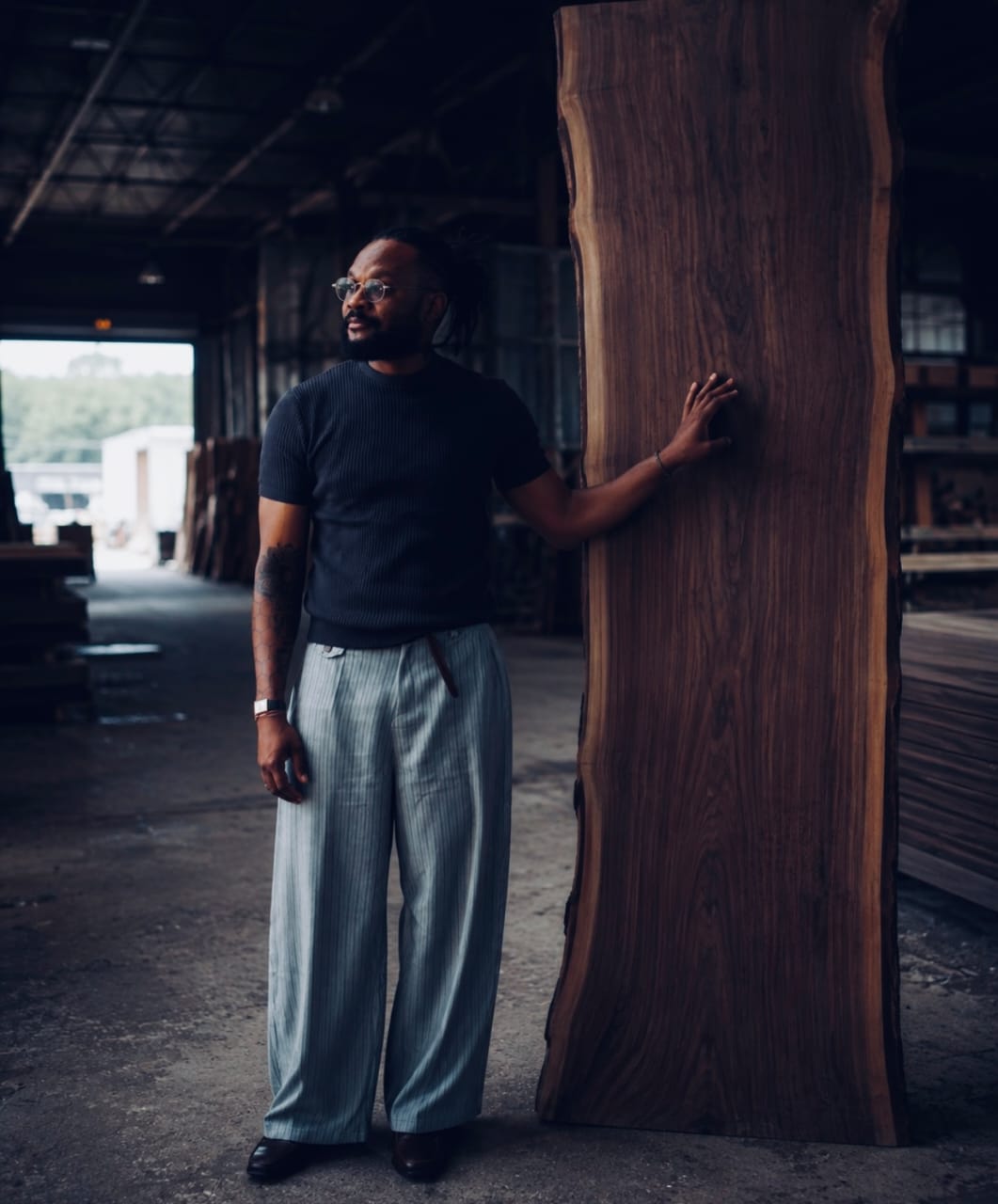
By Richard
The Wood Brutalist | Creative Director, The Snug Company
There is a moment in every project that fascinates me more than the finished piece.
It happens before the first board is cut. Before a sketch becomes a drawing. Before machines begin to hum and timber starts to reveal what it has been hiding beneath its surface for decades.
It is the moment when a simple question is asked: Why should this exist?
Not how beautiful it will be. Not how expensive it will become. Not whether it will collect admiration on social media.
But whether it deserves to occupy space in someone’s life.
For me, that question has become the foundation of every piece I design. It is also why I have come to believe that the world does not need more furniture.
It needs more meaning.
We Are Surrounded by Objects, Yet Starved of Connection
Never in history have we had easier access to beautifully photographed interiors, curated homes and furniture that can be delivered within days.
Scroll through any social platform and you’ll find an endless stream of perfectly styled living rooms. The colors are coordinated. The lighting is warm. The furniture is fashionable. Every image is designed to be admired for a few seconds before disappearing beneath the next.
Somewhere along the way, design became something to consume instead of something to live with.
Furniture followed the same path. It became seasonal: disposable and interchangeable.
A chair is replaced because a new trend arrives. A dining table is discarded because its finish no longer matches a changing aesthetic. Entire interiors are redesigned, not because they have failed, but because attention has moved elsewhere.
Yet the objects that stay with us the longest are rarely the ones we bought to impress other people.
They are the ones that quietly became part of our lives.
The dining table where difficult conversations turned into forgiveness.
The bench where a father tied his daughter’s shoelaces before her first day of school.
The wooden cabinet whose surface carries tiny scratches that only a family understands.These pieces are no longer furniture. They become witnesses.
Good Design Ages; Great Design Accumulates Meaning
When I walk into old homes, I am rarely interested in the newest object. I find myself drawn to the piece that has survived every renovation.
It might have lost some color; its edges may have softened. Its timber may have expanded and contracted through countless rainy seasons.
But it remains; not because it resisted time. Because it accepted it. Wood has always fascinated me for this reason.
Unlike synthetic materials that attempt to remain unchanged forever, timber records its journey. It moves. It breathes. It develops character. It responds to climate, touch and use. Every mark becomes evidence that life happened.
Perhaps that is why I have never believed perfection should be the goal of craftsmanship.Longevity should.
The Discipline of Making
People often imagine craftsmanship as talent.I see it differently.
Craftsmanship is discipline. It is choosing accuracy when speed would be easier. It is making another prototype after the previous one almost worked. It is rejecting a finished piece because one joint is not quite right, even if no client would ever notice.
The irony is that the most important details are usually invisible.
The proportion of a cabinet door. The alignment of timber grain across multiple panels. The balance between shadow and light around an edge. The way a drawer closes with quiet confidence rather than unnecessary force.
Most people will never consciously identify these details. They will simply feel them. That feeling is what separates objects that merely occupy space from those that quietly transform it.
Designing for Memory, Not for Trends
As Creative Director of The Snug Company, I often remind our team that we are not in the business of making furniture.
We are in the business of shaping how people experience their everyday lives.
A wardrobe is where someone’s morning begins. A dining table becomes the center of celebration, disagreement and reconciliation. A bookshelf eventually tells two stories: the books it holds and the person who chose them.
When we reduce furniture to dimensions, finishes and hardware specifications, we miss its real purpose.
Furniture is emotional architecture. It influences routines, conversations, relationships, and memory. That perspective changes how you design.
You become less interested in what is fashionable this year and more interested in what will still matter twenty years from now.
Why The Wood Brutalist Exists
People occasionally ask why I call myself The Wood Brutalist. It isn’t because my work imitates Brutalist architecture; nor is it about creating furniture that feels heavy or severe.
It is about honesty. Brutalism, at its best, refused to disguise materials. Concrete looked like concrete. Steel looked like steel.
I believe wood deserves the same respect. Its grain should not be hidden. Its imperfections should not be apologized for. Its history should remain visible.
The Wood Brutalist is simply my way of exploring that philosophy beyond products. It is a space to question how we design, why we make, and what kind of creative legacy we leave behind.
Because craftsmanship is not only about building objects, it is also about building ideas.
A Different Future for Design
Africa stands at a remarkable moment. Our cities are expanding. Our creative industries are maturing. A new generation of architects, designers and makers is beginning to define its own visual language instead of borrowing one.
This is an opportunity not merely to produce more furniture; but to create work that carries the identity of where it came from.
Furniture that understands our climate, our homes, our rituals, our materials, and our culture.
The future of African design will not be built by copying international trends.
It will be built by designers who are willing to observe their own environment with greater honesty.
The Quiet Responsibility of Every Maker
Every object we create eventually enters someone’s life. Long after drawings are archived and photographs disappear into forgotten folders, that object remains.
Someone will gather around it. Someone will inherit it. Someone may even repair it rather than replace it.
Those thought carries responsibility. It reminds me that every project begins with the same question. Not whether we can build it, but whether it deserves to exist because the world has never suffered from a shortage of furniture. It has only suffered from a shortage of objects made with enough care to become part of someone’s story.
If our work can achieve that, then we have created far more than furniture.We have created something worth remembering.

Toosin is a dedicated sports writer with a strong background in crafting engaging and insightful content. With experience at Goal, he has developed a sharp editorial sense and a refined storytelling approach that brings depth and perspective to sports journalism. His passion for the game goes beyond the headlines, as he captures both the excitement of the sport and the compelling human narratives behind each event. Toosin’s work resonates with a broad and diverse audience, making global sports stories accessible, relatable, and impactful.